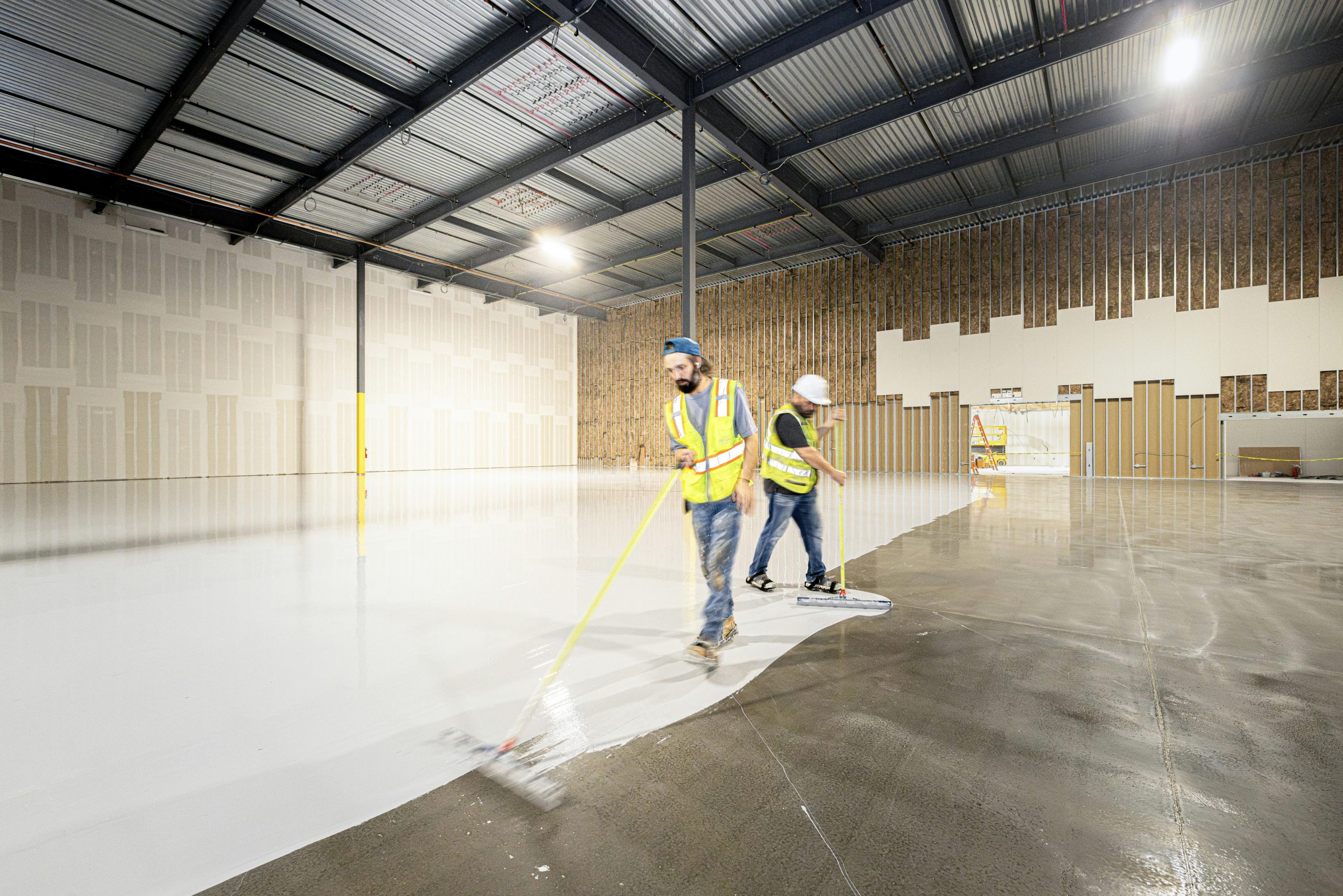
Epoxy vs Polyurethane Floor Coating: What Actually Works in Toowoomba
Some nights you fall down a rabbit hole of floor coating options and come out more confused than when you started. Epoxy, polyurethane, primers, topcoats — it’s a lot of jargon for what feels like a pretty simple problem: your concrete looks rough and you want to fix it.
Here’s the thing though. Up here on the Range, picking a floor coating isn’t just about looks. Toowoomba’s climate throws a fair bit at your floors — baking summer UV, frosty July mornings, storms rolling in off the Downs, and that black soil dust that finds its way into everything. What holds up fine on the coast can struggle badly up here.
This guide walks through the real differences between epoxy coatings and polyurethane coatings — the stuff that actually matters when you’re making a decision for your garage, shed, shop or commercial space. By the end, you’ll have a clear enough picture to talk to an installer without feeling like you’re flying blind.
Short on time? Here’s the quick version:
- Epoxy is thick, tough, and bonds hard to concrete — great for garages and workshops.
- Polyurethane handles UV, scratches and temperature movement better.
- For many Toowoomba floors, the answer is both — epoxy underneath, polyurethane on top.
Floor Coating Selector
Compare coating options for your floor based on its location, use and exposure.
Existing coatings, moisture and concrete damage may affect product suitability.
Why this option may suit your floor
What to consider before choosing
Epoxy vs polyurethane floor coating
| Feature | Epoxy Floor Coating | Polyurethane Floor Coating |
|---|---|---|
| Main characteristics | Hard, rigid and durable | More flexible with good wear resistance |
| Surface finish | Often available in high-gloss and decorative finishes | Available in gloss, satin and other finishes |
| UV resistance | Standard epoxy can yellow or discolour in sunlight | Aliphatic polyurethane generally offers better UV stability |
| Abrasion resistance | Good, depending on the formulation | Often very good, depending on the formulation |
| Chemical resistance | Good to excellent, depending on the chemical and product | Varies by formulation and chemical exposure |
| Flexibility | Generally more rigid | Generally more flexible |
| Typical application | Base coats, concrete floors and heavy-duty flooring systems | Protective topcoats and floors needing wear or UV resistance |
| Application considerations | Requires suitable surface preparation and curing time | Requires compatible substrate or basecoat and careful application |
| Best suited for | Applications needing a hard, high-build coating | Applications needing flexibility, abrasion resistance or UV stability |
Why Toowoomba’s Conditions Actually Change the Equation
Sitting around 700 metres above sea level, Toowoomba runs cooler nights and sharper temperature swings than most of Queensland. Concrete expands and contracts with those shifts, and whatever’s coating it has to keep up.
Then there’s the sun. Queensland UV is brutal year-round, and a garage with the roller door open all afternoon is basically an outdoor space. Add in the summer storm season — those heavy downpours that sweep in fast across the Darling Downs — plus the grit and dust that blows in from the paddocks, and your floor earns its keep every single day.
The coating you choose needs to handle all of that without falling apart or making your Saturdays a cleaning marathon.
Which floor coating is best for different applications?
| Application | Potentially suitable coating | Key consideration |
|---|---|---|
| Residential garage | Epoxy with a suitable protective topcoat | Vehicle traffic, tyre marking and sunlight near the garage entrance |
| Warehouse | Epoxy or a compatible epoxy-polyurethane system | Forklift traffic, abrasion, impact and maintenance requirements |
| Manufacturing facility | Epoxy, polyurethane or a combined system | Chemical exposure, operating conditions and cleaning methods |
| Outdoor concrete floor | UV-stable polyurethane or another suitable exterior system | Sunlight, moisture, weather exposure and substrate condition |
| Commercial workshop | Epoxy with an appropriate topcoat | Oils, chemicals, abrasion and slip resistance |
| Food processing facility | A system specifically designed for food-processing environments | Chemical exposure, washdown temperatures, hygiene and regulatory requirements |
| Commercial showroom | Epoxy or a compatible polyurethane finish | Appearance, scratch resistance, cleaning and foot traffic |
The Basics: What Each Coating Actually Is
This isn’t about chemistry class. It’s just useful to know what you’re working with.
Epoxy
Epoxy is a two-part system — you mix a resin with a hardener and it sets into a hard, thick layer over your concrete. It grips well to bare slabs and can fill in minor surface imperfections as it goes down.
Think of it as a solid shell. It’s dense, it’s strong, and it doesn’t move much once it’s cured.
Polyurethane
Polyurethane (PU) also usually comes in two parts, but it goes on much thinner. It’s more flexible than epoxy — which sounds like a downside until you realise that flexibility is exactly what helps it handle scratches, wear and temperature movement without cracking.
Think of it as a tough, clear skin on top of your floor. It doesn’t add much thickness, but it takes a lot of punishment.
Epoxy vs polyurethane: cost and maintenance
| Factor | Epoxy | Polyurethane |
|---|---|---|
| Initial cost | Often economical as a base or build coat | May cost more, depending on formulation and system |
| Installation cost | Depends on preparation, coating thickness and application method | Depends on preparation, product requirements and number of coats |
| Maintenance | Regular cleaning and prompt repair of coating damage | Regular cleaning and inspection for wear or damage |
| Repair requirements | Damaged areas may need preparation and recoating | Repairs require compatible products and suitable preparation |
| Long-term value | Depends on service conditions and coating lifespan | Depends on service conditions, wear resistance and maintenance |
| Expected lifespan | Varies with product, installation and use | Varies with product, installation and use |
Durability and Scratch Resistance: Tough in Different Ways
Epoxy is hard. Drop a spanner on it, park a car on it, spill petrol on it — it handles all of that well. The catch is that hardness can work against it when it comes to scratches. Glossy epoxy floors tend to show fine surface marks over time, especially from things being dragged across them.
Polyurethane is softer but more abrasion-resistant. That combination means it takes the constant wear of daily use — foot traffic, furniture legs, rolling trolleys — without showing it as quickly.
Hypothetical example — made up to illustrate the point:
Two mates in Highfields both set up home workshops the same year. Glenn goes with epoxy only. Bec goes epoxy base, polyurethane topcoat.
A year later, Glenn’s floor is still solid — no cracks, handles the weight fine. But the area around his workbench has a dull, scratched look from all the dragging and foot traffic. Bec’s floor, same use, still looks pretty close to the day it was laid. The PU absorbed the wear so the epoxy underneath didn’t have to.
UV Stability: The One Most People Overlook
This is where a lot of Toowoomba floors run into trouble.
Standard epoxy yellows in sunlight. It’s not a myth — it’s just chemistry. The UV breaks it down and the colour shifts from clear or light grey to a patchy, washed-out yellow. The floor’s still functional, but it looks tired fast.
Polyurethane — specifically aliphatic PU, which is what’s used in most quality floor topcoats — is made to resist that degradation. It holds its colour and clarity much better under regular sun exposure. That’s why you’ll see it used near large windows, on showroom floors and anywhere a door stays open for hours at a time.
Hypothetical example:
Picture a small café near Queens Park — big north-facing windows, outdoor seating that opens right into the dining room. During the Carnival of Flowers, the doors are open all day. Within a couple of summers of epoxy-only coating, there’s a visible line where the sun hits the floor and where it doesn’t — yellowed near the windows, still grey near the bar.
A polyurethane topcoat doesn’t stop the sun hitting the floor. It just stops the floor from showing it.
Application and Curing: Timing Matters Up Here
Toowoomba’s winters are mild by most standards, but they’re cool enough to slow epoxy curing noticeably. Most epoxy products start struggling below around 10°C — not ideal for a July install if you get an early frost.
Epoxy needs a well-prepped, dry slab — usually diamond-ground before application. It goes on in one or more thick coats and typically lets you walk on it within 24 hours. Vehicles usually need to wait five to seven days. Always check the product specs though; they vary.
Polyurethane goes on thinner and cures differently. It’s sensitive to moisture in the air while it’s setting — a muggy afternoon in January can cause cloudiness or bubbling if the conditions aren’t right. It also has a shorter working window once mixed and doesn’t bond directly to bare concrete, so it needs an epoxy base underneath.
The practical takeaway: spring and autumn are the easiest times to coat a floor in Toowoomba. The temperatures are comfortable for curing and the humidity is usually more cooperative than mid-summer or mid-winter.
Keeping It Clean Day to Day
Both coatings are genuinely easy to maintain — that’s a big part of the appeal. Sweep regularly, mop with something mild, wipe spills when you can. Neither one is going to demand much from you on a normal week.
What does cause problems on the Downs is grit. That fine dust and dried mud that tracks in from the paddocks or the back yard acts like sandpaper over time. A decent doormat and a quick sweep every few days will do more for your floor’s longevity than almost anything else.
Cost: Upfront vs Over Time
Specific prices depend on your slab condition, your floor size and how much prep work is needed — so it’s hard to give numbers that mean much without looking at your actual job.
Generally speaking:
- Epoxy-only systems cost less upfront.
- Adding a polyurethane topcoat adds material and labour cost.
- The combined system usually lasts longer and holds its appearance better in sun-exposed or high-traffic spaces, so the extra spend often pays off over the years.
A floor that looks ordinary in two years and needs a recoat is rarely the bargain it seemed on day one.
What Works Where Around the Darling Downs
Home Garages
Epoxy on its own works well if your garage is mostly closed and shaded. If your door faces west and stays open through the afternoon, a polyurethane topcoat is worth the extra spend to avoid yellowing.
Farm Sheds and Workshops
Out near Oakey, Pittsworth or Dalby, sheds take a beating from machinery, fuel and heavy gear. Epoxy’s thickness and chemical resistance handle that well. If the shed is open-sided or catches a lot of sun, a PU topcoat is a solid addition.
Retail Spaces
Shops along Ruthven Street or in the CBD deal with constant foot traffic and often get plenty of natural light through their frontages. An epoxy base with a polyurethane topcoat gives you durability plus resistance to fading and surface wear.
Cafés, Pubs and Restaurants
Hospitality floors get scraped by chair legs, splashed with all manner of things and cleaned with strong products daily. Polyurethane’s flexibility and scratch resistance suit that environment well — over an epoxy base. Ask about slip-resistant finishes too, especially in kitchen areas.
Commercial and Industrial Spaces
Warehouses, commercial kitchens and heavy-use facilities usually need both. Epoxy carries the load. Polyurethane handles the surface wear and the UV if there’s any exposure to it.
The Answer Most Toowoomba Floors End Up With
For a lot of situations up here, it’s not really a choice between epoxy or polyurethane. The two work better together than either does alone.
Epoxy gives you the hard, gripping base that bonds to your concrete and takes the weight. Polyurethane sits over it and handles the day-to-day punishment — the sun, the scratches, the scuffs from whatever life throws at your floor. You get the thickness where you need it and the protection where it counts.
That said, if your floor is fully enclosed, rarely sees direct sunlight and just needs to be solid and easy to clean, epoxy on its own can do the job fine.
A Few Questions Worth Answering Before You Call Anyone
- Does the floor get direct sun? If so, plan for a polyurethane topcoat.
- Will it carry vehicles or heavy machinery? Epoxy’s thickness matters here.
- Is it a high-traffic area with lots of foot movement or furniture? Polyurethane wears better under that kind of use.
- What’s your budget working with? Epoxy alone is cheaper now. A combined system usually costs less over a five-year stretch.
- When’s the install happening? Aim for spring or autumn if you can — the conditions are just easier.
Where to Go From Here
Epoxy and polyurethane aren’t competing products — they’re tools, and they’re better suited to different jobs. Epoxy builds the foundation. Polyurethane protects the surface. In Toowoomba’s climate, with our UV levels, temperature swings and dusty conditions, using both is usually the smartest call.
Take a look at your space, run through those questions, and jot down what matters most for your situation. Then have a proper conversation with a local installer who knows what Darling Downs conditions actually look like — not just someone reading off a product sheet.
What kind of space are you working with — a home garage, a shed out on the property, or a commercial floor? Drop it in the comments and we’ll share what’s worked for others in a similar spot.